Pin It button on image hover
Showing posts with label Flat Aggie 3. Show all posts

Tuesday, May 19, 2015

Alpaca Farmer Math

In an effort to make math more interesting for kids and to make my kids understand that math really is important, I have started a series of Farmer Math questions to go along with the Flat Aggie reports.  These are patterned after the blog Bedtime Math.  Some of the questions are easy enough for pre-schoolers and sometimes I come up with some to even challenge high school seniors.
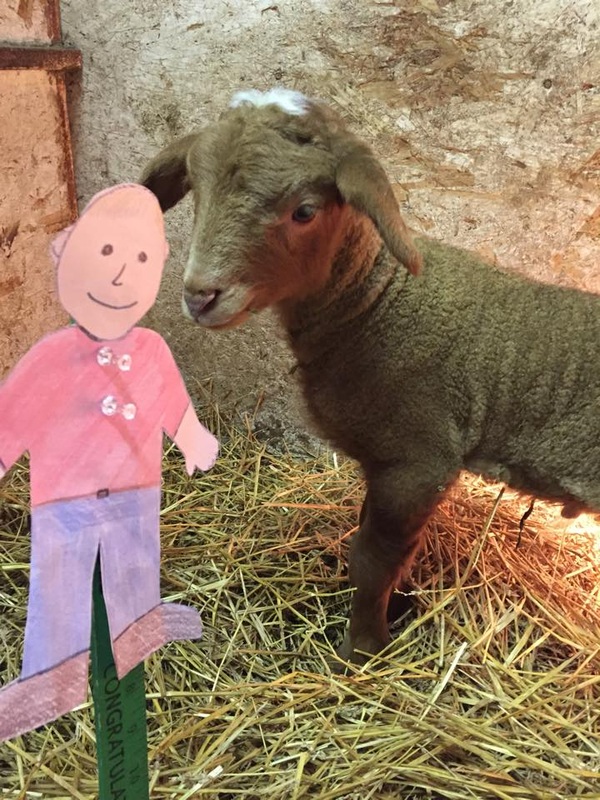
Figure 6. Lexington and Remington are checking Aggie out.
These questions follow the report  Flat Aggie Visits Two Chicks Alpaca Farm.

1. There are 23 alpacas on the farm.  Each alpaca gets 1 cup of feed each morning.  How much feed does it take to feed the alpacas 2 days?

2.  If they harvest 7 pounds of fleece from each alpaca, how many pounds of fleece total will they harvest from the 23 alpacas?

3.  All the fleece will fit in 2 garbage bags.  How many pounds of fleece would be in each bag?

If you are a teacher or homeschooler that would like more information to go with the Flat Aggie reports, send me a message on my contact form.  Along with the report and the Farmer Math questions, we send each teacher an additional page of activities, crossword puzzles and sometimes a few hands on activities.

1.)  46 cups  2.) 161 pounds  3.) 80.5 pounds

-A Kansas Farm Mom
 

Thursday, April 23, 2015

Flat Aggie on a Prescribed Burn


This week's Flat Aggie post comes to us thanks to The Prairie Project at Oklahoma State University. The project has some great learning resources for kids K-12.  Follow them on Facebook and you might be surprised what you learn and every once in a while they have a contest with prizes.   A special thanks to Blayr for taking such good care of Flat Aggie and for being persistent in helping us with the technical difficulties when Gmail hid the report from me. -A Kansas Farm Mom

A few days before the burn, I showed Flat Aggie how to check the weather to make sure the forecast was still the same and everything was good to burn.


Prior to the burn, I got Flat Aggie fitted with his own prescribed fire shirt. Some people wear clothing made out of Nomex, a material that is fire retardant. However, Nomex clothing is not mandatory to burn, as a matter of fact, 100% cotton works just fine. Just make sure that clothing doesn’t have any frays, rips or tears. I showed Flat Aggie what I wear on a burn, jeans (sometimes Nomex pants in the summer), a yellow button down fire shirt, leather boots with good soles and gloves. I always tell people that Nomex clothing is not required, we are trying to get as many people to use prescribed burning, and if extra cost in clothing is going to hinder them from burning, just wear 100% cotton clothing covering your arms and legs, leather boots and gloves.

The day before the burn, Flat Aggie and I drank a lot of water. You can’t make up for getting hydrated after the burn starts. Hydration begins in days and hours prior to the burn. So remember, always hydrate before a burn.


The morning of the burn, we got up bright and early, buckled up and headed to the burn unit. I think Flat Aggie took a nap on the way, it’s ok, he had a long day ahead of him.

Once we arrived, we met the burn crew, looked at maps to go over the piece of land we were going to burn and talked about the plan. The wind was out of the west southwest, so one guy on a four wheeler equipped with a drip torch started the backfire in the southeast corner and headed north toward the northeast corner. Once he reached the northeast corner, he turned around and lit on the way back, making a second strip to create more burned area. Once he reached the starting point in the southeast corner he headed back north for one final, third strip. Once he made it back to the northeast corner he stopped and the group let the fire back a little more. Once everything looked good, one large water truck laid a wet line and a guy on a four-wheeler headed west behind him, lighting fire off of the water line. 

Then another water truck followed them up and made sure the fire didn’t cross the wet line. A few more water trucks followed them, spraying out any fire that crept across the line. When the crew got to the northwest corner they turned south. About a quarter of the way south, they hit a draw that was too large for vehicles to cross. So they made sure the fire was good and hurried all the way back around the unit to the other side of the draw. All but two water trucks and a guy on a four-wheeler went back to the west side to finish lighting the west side. One man and two water trucks stayed in the southeast corner and started lighting fire off of the road, headed west. The plan was to bring both fires, from the north and from the east, together in the southwest corner at the same time to tie in the head fire.

After the burn was completed, everyone sat down for lunch. Flat Aggie and I headed out to take pictures of some bison. He got to see hundreds of bison, grazing where they pleased. There are no interior fences, so they are able to travel where they please. Usually they follow recently burned areas.


As an activity, have the teacher draw the burn unit on the whiteboard or chalkboard and have the students work together and follow the instructions above to see how the prescribed fire was conducted. This is what burn crews do before a fire to make sure everyone on the crew understands the plan. Below is a blank canvas to show the teacher shape of the burn unit.


Tuesday, April 14, 2015

Fish Farmer Math

In an effort to make math more interesting for kids and to make my kids understand that math really is important, I have started a series of Farmer Math questions to go along with the Flat Aggie reports.  These are patterned after the blog Bedtime Math.  Some of the questions are easy enough for pre-schoolers and sometimes I come up with some to even challenge high school seniors.

These questions follow the report Flat Aggie Visits the Timpner Fish Farm.  Additional educational materials can be found in the post All About Aquaculture.
Visiting the baby fish or fingerlings.  These fish are 5 to 6 inches long.
1.  If the fish are 3 inches long when they arrive at the fish farm and are 13 inches long when they sell them, how many inches did the fish grow while they were at the fish farm?

2. If the water temperature is currently 38 degrees F, and the fish don't come out of hibernation until the water is 50 degrees, how many more degrees does the water need to warm up before the fish come out of hibernation?

3.  A truckload of fish contains 4000 pounds.  The farmer gets $4.25 per pound of fish.  How much did the farmer get for his truckload of fish?

4.  If it costs $2.00 per pound to raise the fish, how many dollars profit did the farmer get for the above truckload of fish?

5.  A fish cage measures 6 feet by 16 feet by 8 feet.  What is the total volume of the cage?

If you are a teacher or homeschooler that would like more information to go with the Flat Aggie reports, send me a message on my contact form.  Along with the report and the Farmer Math questions, we send each teacher an additional page of activities, crossword puzzles and sometimes a few hands on activities.

ANSWERS:  1.) 10 inches  2.) 12 degrees 3.) $17000  4.) $9000  5.) 768 cubic feet

-A Kansas Farm Mom
 

Monday, March 23, 2015

Cattle Farmer Math

In an effort to make math more interesting for kids and to make my kids understand that math really is important, I have started a series of Farmer Math questions to go along with the Flat Aggie reports.  These are patterned after the blog Bedtime Math.  Some of the questions are easy enough for pre-schoolers and sometimes I come up with some to even challenge high school seniors.

These questions follow the report Flat Aggie Visits a Manitoba Beef Farm.  Additional educational materials can be found in the post All About Beef.
Flat Aggie has decided to follow a calf number 101 on the Nelson Ranch a little further.  I think this math lesson may challenge some of my older readers to think.

1.  Flat Aggie has enough ear tags for Calf 101 plus 2 more, but 12 calves were born overnight. How many more eartags does he need to make, so that all the calves that are born will have an eartag? 

2.  Calf 101 weighed 65 pounds at birth and 650 pounds at weaning.  What is his total weight gain?

3.  Calf 101 is weaned at 205 days of age.  What is his average daily gain (rounded to the nearest hundreth)? (Average daily gain is the average amount of weight he gained each day for the 205 days)

4.  Calf 101 weighed 650 pounds at the Nelson Ranch and was shipped on a trailer to a neighboring farm where he was weighed again and only weighed 640 pounds.  How many pounds did he shrink?

5.  What percent  of his weight did he shrink? (Percent Shrink is the percentage of an animal's weight that is lost during transport from one place to another relative to its full live weight before it was transported)

If you are a teacher or homeschooler that would like more information to go with the Flat Aggie reports, send me a message on my contact form.  Along with the report and the Farmer Math questions, we send each teacher an additional page of activities, crossword puzzles and sometimes a few hands on activities.

ANSWERS
1.) 10 eartags  2.) 585 pounds  3.) 2.85 pounds per day  4.) 10 pounds  5.) 1.5%

-A Kansas Farm Mom

Thursday, February 19, 2015

Sheep Farmer Math

In an effort to make math more interesting for kids and to make my kids understand that math really is important, I have started a series of Farmer Math questions to go along with the Flat Aggie reports.  These are patterned after the blog Bedtime Math.  Some of the questions are easy enough for pre-schoolers and sometimes I come up with some to even challenge high school seniors.
Picture
These questions follow the report Flat Aggie visits Uptown Farms and Flat Aggie Visits Clay Hill Ranch.  Additional educational materials can be found in the post All About Sheep.

1.  Flat Aggie saw 2 ewes lamb in the morning and 2 ewes lamb after lunch. How many ewes did Flat Aggie see lamb in all?

2.  If 3 ewes had twins and 1 ewe had triplets, how many lambs were there in all?

3.If the ewes are fed 6 pounds of hay per day and there are 28 ewes in each pen, how many pounds of hay does each pen need per day?

4.  What percentage of a bale of hay would be fed to each pen per day if a hay bale weighs 850 pounds?

5.  Farmers often calculate their lamb crop in percent lambs born alive per ewe.  If Uptown Farms had 98 ewes in all, 2 ewes did not have live lambs and the remaining ewes averaged 2.3 lambs born alive. How many lambs did they have in all to the nearest whole number?   What would that the lamb crop be?  (Need a hint?  Number of live lambs divided by the number of ewes in the flock.)

If you are a teacher or homeschooler that would like more information to go with the Flat Aggie reports, send me a message on my contact form.  Along with the report and the Farmer Math questions, we send each teacher an additional page of activities and sometimes a few hands on activities.

Answers: 1.) 4 ewes  2.) 9 lambs  3.) 168 pounds of feed  4.) 19.76%  5.) 221 lambs, 225% lamb crop 

-A Kansas Farm Mom

Thursday, January 22, 2015

Goat Farmer Math


In an effort to make math more interesting for kids and to make my kids understand that math really is important, I have started a series of Farmer Math questions to go along with the Flat Aggie reports.  These are patterned after the blog Bedtime Math.  Some of the questions are easy enough for pre-schoolers and sometimes I come up with some to even challenge high school seniors.

These questions follow the report Flat Aggie's Trip to SoCal.  Additional educational materials can be found in the post All About Goats.

1. When Flat Aggie arrived at the Nadadrop Ranch, 3 mama goats (called does) had each just given birth to 3 baby goats (called kids).  How many kids were born just before Flat Aggie arrived?

2.  While Flat Aggie stayed at the Nadadrop Ranch, 12 does gave birth to 3 kids each.  How many kids were born while Flat Aggie was at the Nadadrop Ranch?

3.  If the ranch has 50 does and 23 of them had given birth when Flat Aggie left, how many does are left to have kids?

4.  If the ranch has 50 does and 23 of them have kidded, what percentage are left to have kids?

5.  If the ranch has 50 does and 1 of them does not have kids, what percentage had kids in all?

1.) 9 kids  2.) 36 kids  3.) 27 does 4.) 54%  5.) 98%


If you are a teacher or homeschooler that would like more information to go with the Flat Aggie reports, send me a message on my contact form.  Along with the report and the Farmer Math questions, we send each teacher an additional page of activities, crossword puzzles and sometimes a few hands on activities.

-A Kansas Farm Mom

Wednesday, January 21, 2015

Egg Farmer Math

In an effort to make math more interesting for kids and to make my kids understand that math really is important, I have started a series of Farmer Math questions to go along with the Flat Aggie reports.  These are patterned after the blog Bedtime Math.  Some of the questions are easy enough for pre-schoolers and sometimes I come up with some to even challenge high school seniors.

These questions follow the report Flat Aggie went North of the Border to learn about Eggs.  Additional educational materials can be found in the post All About Eggs.

1.  If there are 3 hens in each pen, how many hens are in 2 pens?

2.  If a hen can lay 1 egg per day, how many eggs can she lay in 1 week?

3.  Flat Aggie learned that eggs are put into trays of 30 eggs.  If the tray is an array,  it has 6 rows of eggs in one direction and how many rows of eggs the other direction?

4.  The trays of 30 eggs are put into stacks 6 trays high.  How many eggs per stack?

5.  60 stacks of eggs are put onto a pallet.  How many eggs per pallet?  How many dozen is that?


 ANSWERS: 1.)6 hens  2.)7 eggs  3.)5 rows  4.)180 eggs  5.)10,800 eggs per pallet, 900 dozen


If you are a teacher or homeschooler that would like more information to go with the Flat Aggie reports, send me a message on my contact form.  Along with the report and the Farmer Math questions, we send each teacher an additional page of activities.

-A Kansas Farm Mom

Tuesday, January 20, 2015

Flat Aggie Goes North of the Border to Learn about Eggs

Flat Aggie went North to Canada to visit my friend Dianne and her chicken farm!  I really do learn something every time one of these reports comes back. -A Kansas Farm Mom


Eggs – A good part of a healthy diet 

How do you like to eat your eggs? More people are eating eggs as they are versatile and easy to prepare. Busy families chose eggs because they are affordable and nutritious. 


My name is Dianne McComb and I am an egg farmer. My farm is located near London, Ontario, Canada where we care for 25,000 laying hens and grow crops on our 300 acre farm. I share the responsibilities of caring for the hens with my brother and sister-in-law. One of us is in the henhouse every day to be sure the hens have enough fresh air, food and water. My hens are housed inside a big barn with fans to move the air. Hens are kept inside where they are safe from predators, outside diseases and the cold weather in winter or the hot weather in summer. Inside they have enough room to all stand up, move around and eat or drink. 

In their units we can monitor if there is a health issue with a hen or if she is being picked on by her room mates. Hens can be mean toward one another. Have you heard of “Pecking Order”, that is what occurs with any group of hens where one is stronger and more aggressive than the others. If one hen is more dominant she may pick with her beak on others to the point where they are injured. They must be separated and we have a plan to care for the needs of each by moving them apart to different units. 


Laying hens are like athletes they work hard for us and need good nutrition which they get from a balanced diet of corn, wheat, soybeans, vitamins and minerals. In my area we grow corn, wheat and soybeans which are mixed together with the vitamins and minerals at a feed mill. An important mineral is calcium which is to help the hen form the shell around the one egg she lays every day. That’s right only one egg a day! Think about how many eggs you see where you buy your eggs. Lots and lots of dozens of them and a hen lays only one a day. This is why we need so many hens to produce the eggs your family eats. 

An egg yolk, the yellow part of the egg, is in each hen when she is a chick. When she is mature at 19 weeks she drops the yolk inside her body into the oviduct where the albumen starts to form around the yolk and thin membrane envelopes this yolk/albumen which is then covered by the shell. This process takes approximately 26 hours to complete. A healthy hen can lay up to 330 eggs in a year which is normally how long she is kept in my barn. 


Eggs are gathered daily (you see Flat Aggie helping) they come from the hens in the barn along a belt to a conveyor, over a machine and into plastic trays. The trays are made into piles of 6 trays each and the piles are placed on a pallet which is then moved into a large cooler. 


Twice a week eggs are picked up from my farm and taken to a grading station like the one shown on this Youtube video https://www.youtube.com/watch?v=BjDQ8QXB7cg. Eggs are washed, candled over a bright light to see there are no cracks or other imperfections, then they weighed and by weight it is determined if they go into Ex Large, Large, Medium, Small or Pee Wee cartons. Not the size of the egg but the weight is how it works. You see young hens lay small eggs and older hens lay the larger eggs. A hen is a living creature so the egg she lays may not be the same as the last. The time it takes the egg to get from the hen to the store is 4 to 5 days, so eggs in the store are for the most local and fresh. 


Eat lots of healthy eggs to give you the energy needed to do your best every day.

Have a Grade A Day!

Tuesday, December 16, 2014

Flat Aggie visits J-M Mushroom Farm


            I got to visit J-M Mushroom Farm in Miami, OK.   J-M Farms is the only commercial mushroom farm in Oklahoma. They are family owned and have been in business since 1979.  J-M has a large central facility where packing, shipping, composting and the beginning stages of growing occur.  There are also five satellite farms where most of the harvesting occurs.  They supply mushrooms to 8 states.  J-M Farms grows white button mushrooms, crimini or baby brown mushrooms, and portabella or large brown mushrooms.  They grow about 27 million pounds per year.
           
            When I arrived at J-M Farms, I had to be signed in as a visitor.  I received my visitor’s badge, hairnet, gloves, rain suit, and smock that I would need for my visit.  They are very serious about food safety here!   


            Growers, Lisa, Susan, and Beth, showed me around the farm and taught me about growing mushrooms. I didn’t realize how much time went into growing mushrooms.  From the time the compost or the “food” starts being made to when they put the spawn or “seed” in takes about 32 days.  Then after the “seed” goes into the compost it takes about 28 days to get a mushroom.

            The first process in growing mushrooms is making the compost or mushroom food.  This takes place outside, whether hot or cold.  The day I was out there it was 32 degrees.  The basic ingredient of compost is wheat straw.  It also contains gypsum, chicken litter, and cotton seed meal.   
 
These ingredients are mixed together, watered, flipped, and set in a pile to break down.  They do this with front end loaders and specialized compost turners.  This process utilizes naturally occurring microbes, or bacteria, to convert these raw ingredients into mushroom food.  The composting process takes 24 days.  After the 24 days, the compost is placed on the fill line and put into trays and moved into the building for the next phase.


            The next step is eight days long.  It involves the compost being pasteurized.  During pasteurization, the air and compost is heated to 140 degrees to kill any bacteria that will make mushrooms or people sick.           

After the 8 days, the next step is adding the mushroom spawn or seed.   

The compost is dumped out of the trays on a line that mixes it and adds the “seed”.  It is then put back in the trays and pressed. 

Then it goes into a spawn room where the compost temperature and air temperature will be monitored so that the mushroom seed can grow.  It is in this room for 13 days.


             The trays are then pulled out of the spawn room and put on another line where the casing layer is applied to the surface of the trays.  Casing layer is made of black peat, blonde peat, lime, and CI (casing inoculate).  The CI is added to the layer to help the mushroom grow.  This layer looks like a layer of dirt on top of the trays.  This is what the mushroom will grow out of and be picked from.  The trays are then placed in a setback room where the compost temperature and air temperature are monitored and water is applied.  They are in this room for 11 days.


            On day 12, the trays are then transferred to the picking hall or a satellite farm to be harvested or picked. 

            In the picking room, the compost temperature and air temperature are monitored and more water is applied.  On day 16 or 17 after casing, the mushrooms will be ready to be picked.  The harvesters pick the mushrooms by hand into the containers that have been ordered by J-M Farms’ customers. 


            Then the mushrooms go to the CPM (Crop Production Measurement) department to be weighed and scanned. 

            The sales department gets orders from customers and gives them to the packing and shipping department.


Then they are transferred to the packing department to be packaged.


 They also slice mushrooms in the packing department.

The packing department then transfers the packages to the shipping department.


Then they will be shipped out to stores and restaurants in the 8 states that J-M supplies.


                             Check your local stores for any J-M products.

Thank you so much to the staff at J-M Farms.  I really had no idea what went into mushroom farming when I asked if Flat Aggie could have tour.  -A Kansas Farm Mom