
January 2019
In January Flat Aggie visited the Lorenz Farms near Broken Bow, Nebraska which is
owned by myself (Bobbi) and my husband Mark. We have a son named Isaak who
will turn 6 years old in February. He is in Kindergarten at SEM (Sumner Eddyville,
Miller) School located the small town of Sumner, Nebraska. His school is 3 towns
combined and is Pre-Kindergarten through High School (12th grade) all in 1 large
building.
owned by myself (Bobbi) and my husband Mark. We have a son named Isaak who
will turn 6 years old in February. He is in Kindergarten at SEM (Sumner Eddyville,
Miller) School located the small town of Sumner, Nebraska. His school is 3 towns
combined and is Pre-Kindergarten through High School (12th grade) all in 1 large
building.
Our farm grows corn and hay, which we feed to cattle we raise and custom care of
for a feedlot. We own about 100 head of cows which we raise calves to sell to a
feedlot and we work for a large feedlot that is about 20 miles away from us taking
care of some of their calves. The feedlot uses smaller farmers like us to grow
young calves (called feeder calves) to prepare them to spend 4-6 months in the
big feedlot before they are harvested into high quality, nutritious beef. We can hold
three semi loads of calves, which transport 70-100 calves each depending on how
big the calves are. Right now, we have 267 head of feeder calves in three different
pens from the feedlot. Calves will come to us weighing between 500 and 700
pounds. They will gain approximately 300 pounds while they are here for 70-100
days. Our job is to vaccinate them when they arrive, get them use to eating fresh
feed daily from a bunk, and monitor their health daily.
Flat Aggie had get up early in the morning so she could ride along with Mark while
he did the morning chores and fed all the cattle. She got to help Mark load the feed
ingredients into our feed wagon which mixes all the ingredients into a balanced diet
containing all the nutrients they need to grow and stay healthy. We feed a mixture of
hay, corn, wet distillers grain (co-product from the ethanol industry), and a mixture of
vitamins and minerals. Mark and Aggie checked each of the groups of calves to
make sure every one looked healthy and came to the bunk to get their breakfast.
This time of year our cows are grazing corn fields. They eat the left over corn plants
after the grain has been harvested in the fall. After Aggie and Mark got done feeding
the calvesthey drove to the field to check the cows. They made sure the water tank
was full and free of ice, checked the salt and mineral feeder to make sure it was not
empty and drove around the cows to make sure they were all healthy and getting
enough feed. Our cows will begin calving (having their babies) around March 1st. We
will bring them all back to the fields and pastures around our house and barns in mid
February so we can check them and their new calves every 2-3 hours through out
the day and night.
after the grain has been harvested in the fall. After Aggie and Mark got done feeding
the calvesthey drove to the field to check the cows. They made sure the water tank
was full and free of ice, checked the salt and mineral feeder to make sure it was not
empty and drove around the cows to make sure they were all healthy and getting
enough feed. Our cows will begin calving (having their babies) around March 1st. We
will bring them all back to the fields and pastures around our house and barns in mid
February so we can check them and their new calves every 2-3 hours through out
the day and night.
We brought the first calf heifers (2 year old cows that will have their 1st baby this
year) home the 1st of January. They are scheduled to start calving Feb 4th. They
have their babies earlier than the cows so that we can keep an even closer eye on
them to make sure both the heifer and new born calves are healthy and the new
mommies learn how to be good moms. We keep the heifers in a small pen by the
barn where we can keep them out of the winter weather better and have good
lighting to see what is happening at night. Every night when we do our 10 pm check
we put the heifers in the barn for better protection from the colder night time
temperatures. We use technology to help us monitor the birthing process without
having to make the heifer nervous with us being out in the pen or barn all the time.
We have cameras installed in the barn that are wirelessly connected to a computer
screen in our living room. These cameras allow us to see what is happening out in
the barn without disturbing the heifers. We still walkthrough the heifers every 2
hours but we use the camera to help monitor between checks. We were hoping
Aggie would get to see a new calf before she headed out for her next adventure but
the heifers did not cooperate to give her the opportunity to see a new born.
year) home the 1st of January. They are scheduled to start calving Feb 4th. They
have their babies earlier than the cows so that we can keep an even closer eye on
them to make sure both the heifer and new born calves are healthy and the new
mommies learn how to be good moms. We keep the heifers in a small pen by the
barn where we can keep them out of the winter weather better and have good
lighting to see what is happening at night. Every night when we do our 10 pm check
we put the heifers in the barn for better protection from the colder night time
temperatures. We use technology to help us monitor the birthing process without
having to make the heifer nervous with us being out in the pen or barn all the time.
We have cameras installed in the barn that are wirelessly connected to a computer
screen in our living room. These cameras allow us to see what is happening out in
the barn without disturbing the heifers. We still walkthrough the heifers every 2
hours but we use the camera to help monitor between checks. We were hoping
Aggie would get to see a new calf before she headed out for her next adventure but
the heifers did not cooperate to give her the opportunity to see a new born.
We enjoyed showing Flat Aggie around our farm and sharing with her how we raise
beef.
beef.
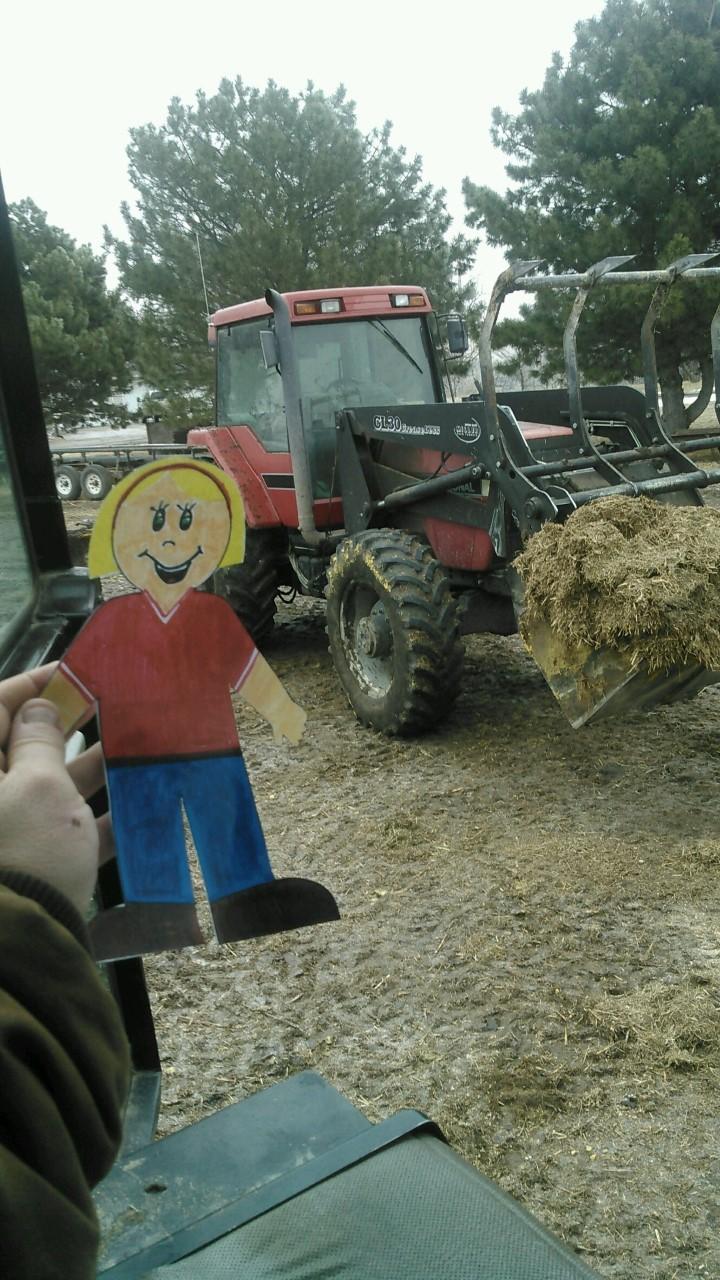
Riding along while loading the feed in the feed wagon to mix. The loader bucket
has ground hay in it.
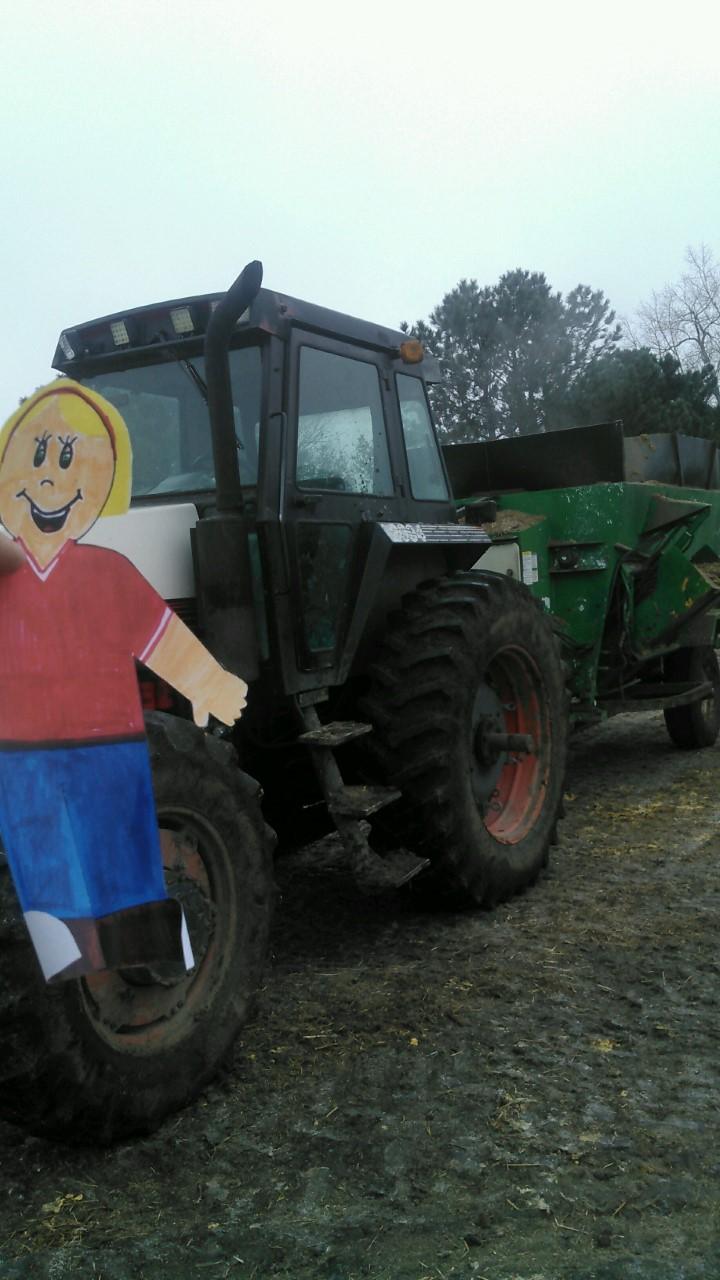
Tractor and feed wagon are loaded, feed is mixed together, and ready to deliver
it to the calves.
it to the calves.
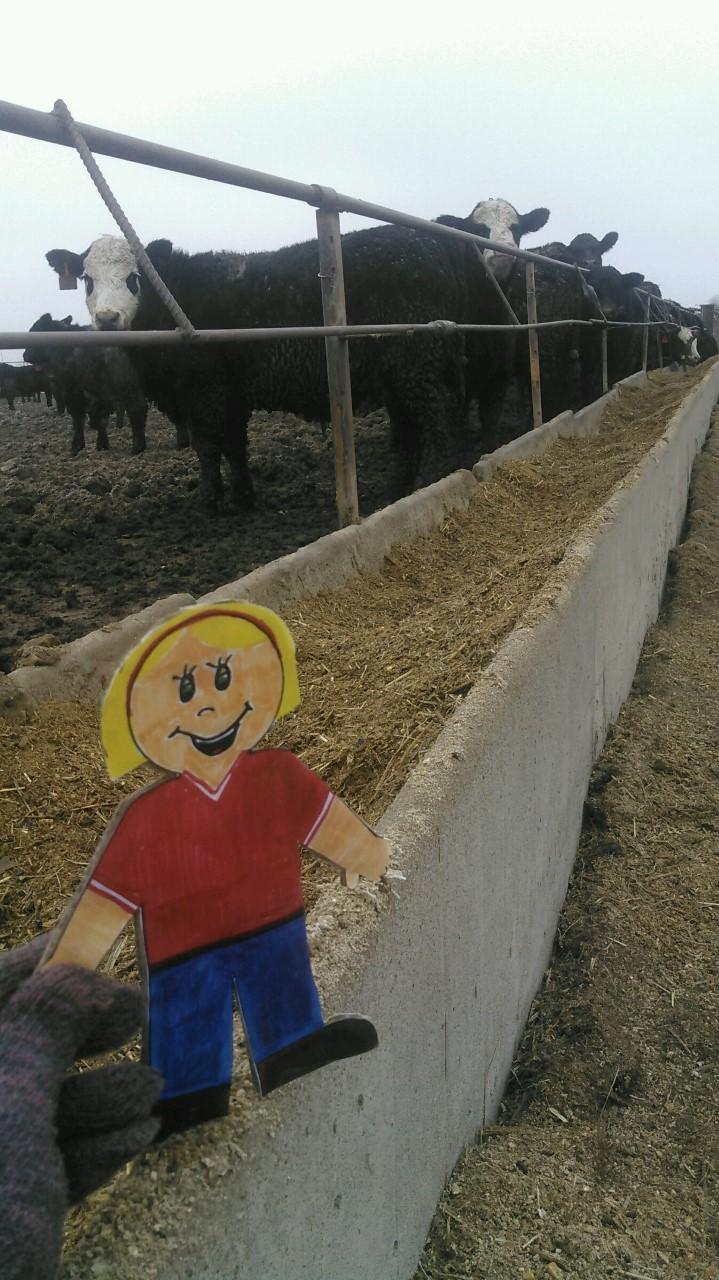
Feed has been delivered to the calves. They were not very sure about getting their
picture taken. These calves weighed 585 pounds when they arrived around and
will be leaving in the next week or two.
picture taken. These calves weighed 585 pounds when they arrived around and
will be leaving in the next week or two.
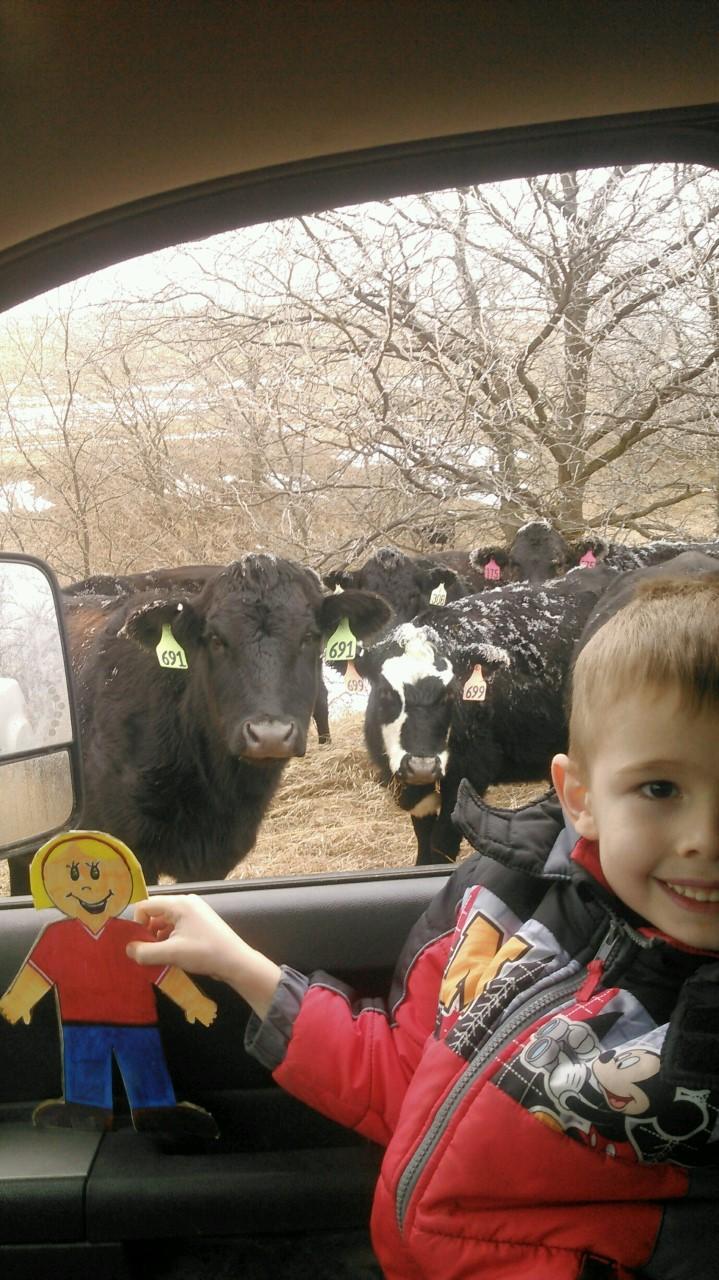
Mark, Isaak and Aggie checking the cows. The cow with the green ear tags
#691 is one of Isaak’s cows. We use a numbering system on our cows. The
1st number is the last number in the year that they were born, #691 was born
in 2016, this spring she will turn 3 years old. The last two numbers are their
unique ID number. Every cow has her own number.
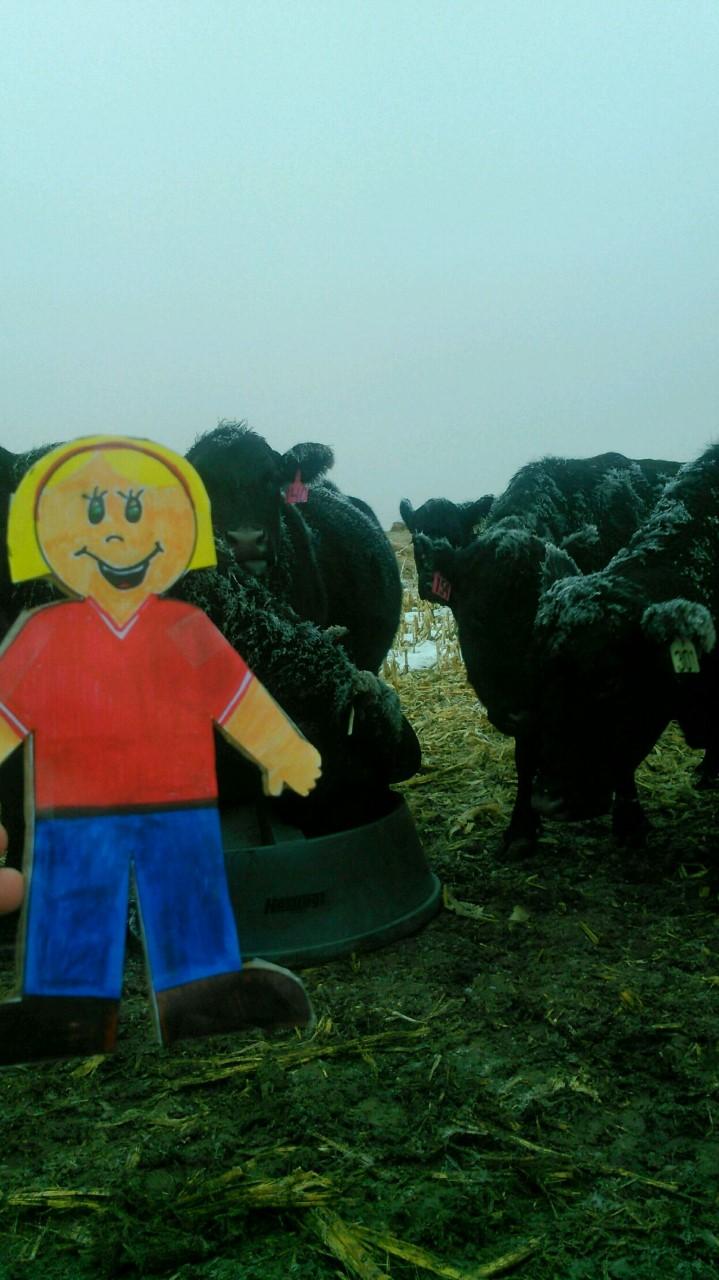
Filling the mineral feeder with salt and mineral. The cows will lift the lid on the
feeders with their heads and lick the mineral and salt. It was a pretty cold and
frosty day and the cows had some frost on their backs. It is actually a good sign
when there is snow or frost on the cows. Cows with plenty of insulation (good
clean fluffy hair, and plenty of fat under their skin) stay warm on the inside even
though they may look cold on the outside.
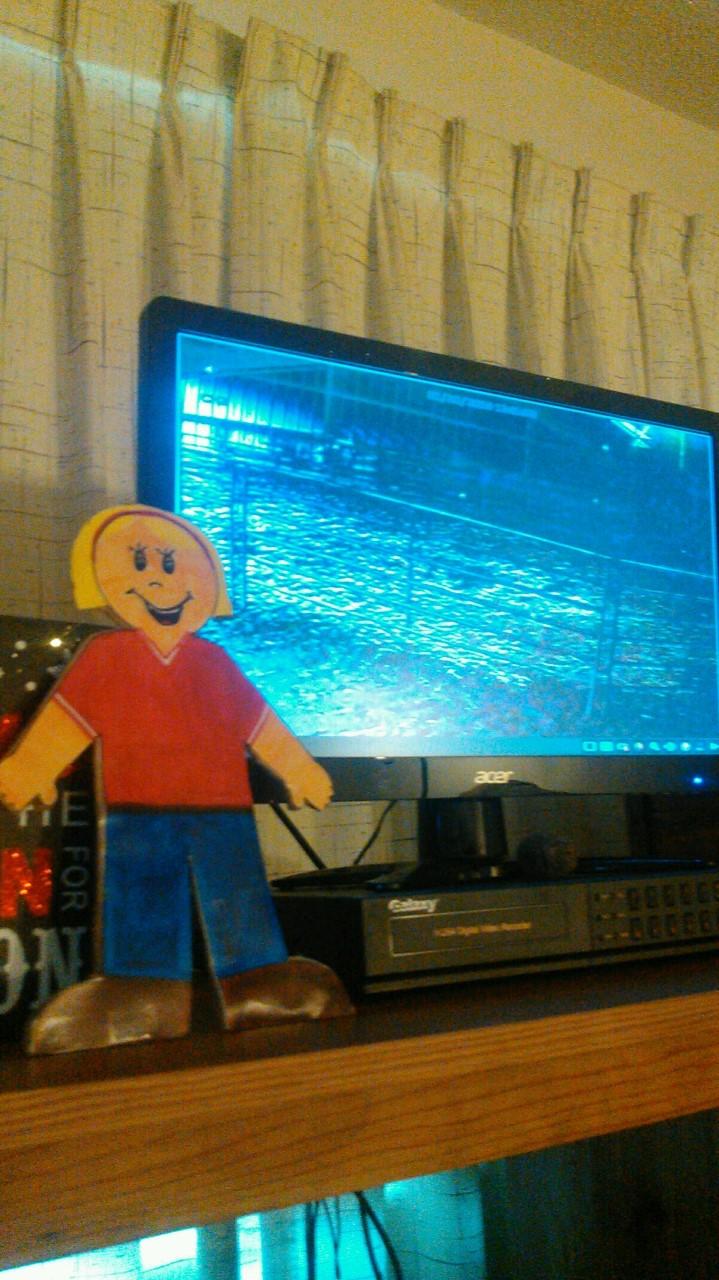
This is the computer screen that shows the barn cameras. We have two cameras
set up so we can see 2 different pens that are in the barn. The heifers are moved
into the barn at night so we can keep a closer eye on them as well as keep them in
where it is warmer during these cold winter days. During the day they are out in a
pen in front of the barn but they have the option to come in
if the weather is really bad.
if the weather is really bad.
For additional class resources we recommend visiting: Beef Farmer Math and All About Beef.


.jpg)


