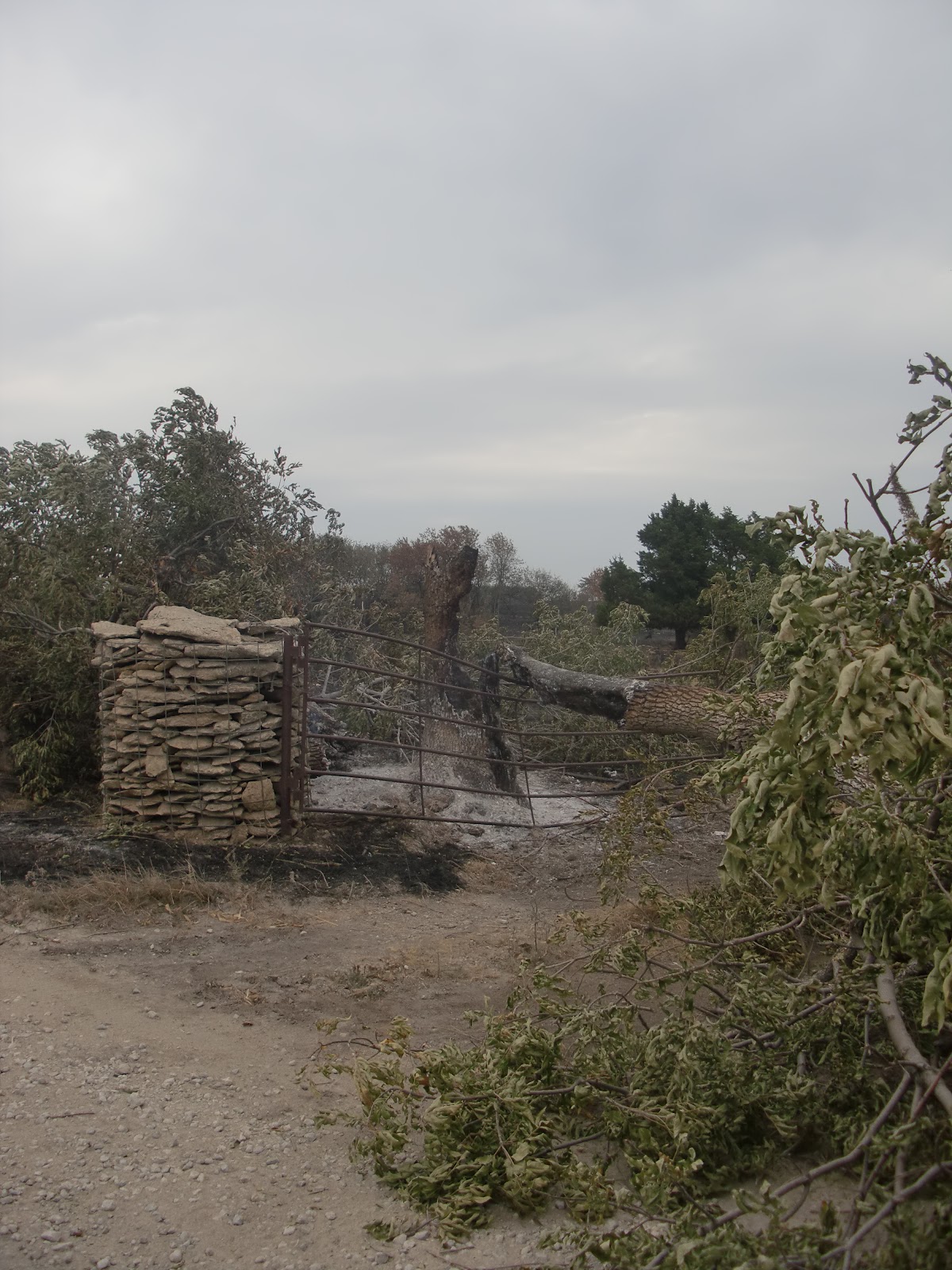
A note from A Kansas Farm Mom: I have some amazing friends who can write and speak much better than I. Mr. Daryl Donohue shared these comments on his Facebook page the other day and I asked if I could share it with you. Lessons for both the consumers and ranchers can be found in his words.
I feel compelled to comment on the subject of prescribed burning for Native Grasslands.
Mother Nature burned whenever she felt like it. She managed the "Great Pasture" as she saw fit and the ecosystem evolved and thrived. Before Europeans arrived, The Native Americans emulated Mother Nature and burned as they had observed the buffalo thriving on the new green grass each year. They were the first cattlemen and learned that an annual burning benefitted not only their meat supply, but their supply of fruits and vegetables, and medicinal plants as well.
We, as livestock producers, continue with this ritual to help keep the rapidly disappearing Native Grasslands healthy and viable for the benefit of food production in the form of beef. Now, understand that the grassland that is left is usually on rocky soil and hills that are NOT suitable for farming, nor gardening. The thin layer of soil that the grass holds is there because of that grass. Erosion by wind and water is a major factor of why this land needs to be kept in grass.
Fire is a major component that we use to keep this Eco-system in balance.
It is NATURAL.
It is cost-effective.
And it is the best tool that the land manager has as far as healthy grass.
Fire is needed to scarify, or open, seed coats for germination on the many forbes, legumes, and grasses comprising the system's mix. Wintertime freezing is the other method.
Fire helps control invasive species such as brush, Multi-Flora rose, blackberries, and the scourge- Red Cedar trees.
Fire is a good thing as long as it is used correctly and with respect.
We have seen the results of the wildfire in Western Kansas and the damage wrought because of the high winds carrying it. Fire can cost a lot in loss of livestock, facilities, fences, homes, peace of mind, and unfortunately, human life.
One can never be too careful when doing a burn.
You sure don't decide to burn and have a dinner date set at 6:30 and expect to make it.
Fire is the main priority of the day and you don't leave until it is out.
Fire is not a toy.
It does have a hypnotic quality that causes common sense to exit stage left in some cases.
Fire has a tendency to sneak around and get loose if left to its own devices.
Fortunately, we have Rural Fire Districts in our counties on which we can rely for help. However, they are made up of unpaid volunteers who leave their responsibilities when they are called out. These heroes put their lives on the line when fighting an escaped fire. They protect lives of people and livestock, as well as homes, etc from destruction. A lot of times they seldom get a thank you. They come because of the ethic of being a part of community. This can be severely strained due to negligence of the party that lit the fire. Especially, if it is a repeat offense. This costs the volunteer in time lost, threat to safety, fatigue, and well-being. It also costs the fire district fuel, repairs, possible equipment destruction, and loss of manpower due to injury, or members deciding not to volunteer anymore. It costs in the loss of family time of the firefighters.
In our county alone, Rural Fire has responded to over 50 fire calls in March and April, to date, because of burning with the high winds, or sudden changes in wind direction.
Is this all due to negligence? No, it is not.
There are times when the best figured fires can get loose due to a burning rodent running across a black line. Or, sparks kicking up when the wind switches. Cow pies are common culprits as they will smolder. Either way, one must do their due diligence and have a degree of "What can go wrong?"when conducting a prescribed burn. One must also consider the people around them before lighting off.
In closing, we as agricultural producers must strive to do our best in working to keep our privilege of prescribed burning. The saying of "One rotten apple spoils the whole barrel" comes into play more than ever when dealing with Fire. When you have a public who doesn't understand why we burn, and all they see is destruction and cost of resources, it makes it harder for us to do our job of providing affordable food.
Remember,
Safety First.
Ask for help.
Take your time and plan well.
And call Central Dispatch before you start.
Thanks for listening.
Showing posts with label Wildfire. Show all posts
Thursday, April 7, 2016
Monday, April 4, 2016
Volunteers Across the State Made Us #KSPROUD
Another guest post from one of my friends, Alan Black who traveled two hours to help with the Anderson Creek Fire. Unlike Dylan who was there are Day 1, things were more controlled and Alan and his crew were there to watch hot spots and let the guys who had been fighting for days get a much needed break. I was impressed with his view of things. Alan is also a Volunteer Firefighter who left behind his family to help out as best he could.
On Thursday afternoon March 24th, we got a call that Butler County Task Force 3 was putting together trucks and personnel to mobilize to Medicine Lodge. Saturday morning around 4 a.m, my partner and I left El Dorado for the 2 hour trip down there to relieve our Friday crew.
It's amazing what goes through your mind on your way to a disaster of that scale.
What's it going to look like?
How does a small community handle an influx of that many people and vehicles?
We arrived around 6:20 a.m and prepared for our 12 hour shift on our truck.
Fire trucks, tankers and semi's lined the streets in front of the command post as day shift and night shift strolled in and out of the building with night shift telling the day shift to have a safe and productive day.
The command post room was filled to the gills for the daily briefing on containment and safety concerning the use of the Blackhawks for water drops on that day and Division assignments.
We strolled down to the church for breakfast and to grab a sack lunch for the day's work, being told "Take as much as you need. We have plenty for you all."
As we proceeded the 20 miles west to Sun City, we were finally getting a bird's eye view of the fire stricken area. Road graders had been used to clear road ditches of all grass and trees to try and stop the fire to no avail. It still jumped the highway.
We ventured south of Sun City over to the Gyp mine where they had a flare up the day before. My partner and I met up with a Gorham Fire District truck and we toured the area where we would watching hot spots.
One thing that stood out was you couldn't tell that none of these fire fighters had never met or even worked together before. We were all there for one common goal and that was fire containment and structure protection.
Later in the day, we got our first chance to watch the Blackhawks drop water on hot spots in the valleys in our division. It was very interesting to watch considering we never see anything like that in Kansas.
As we looked around, it was blackened ground as far as the eyes could see. Fences and power lines burnt and laid on the ground. We had the chance to meet up with some of the local fire fighters working on their trucks from a rough 48-60 hour fire fight, and with local ranchers as we traveled their properties checking out fire lines.
The message was always the same "we greatly appreciate everything you guys are doing for us and the communities around us" and one rancher even offered up his bunk house for fire fighters to stay in.
As our shift wrapped up, we did a quick debriefing and headed back to the church for supper with another chance to visit with more locals. Despite everything that that community had been through everybody seemed to be up beat and positive, all grateful for all of us being there. One thing I mentioned in a previous post on Barber County 2016 fire was that the fire fighters are truly the blessed and thankful ones. The hospitality and the amount of food that they kept out for us and the 2 bunk stations was absolutely phenomenal.
Sitting in the church you couldn't help but noticed the stage full of donations to the community and all the extra stuff that was donated for the fire fighters who ended up staying the night in the area.
All we hear about in America anymore is how bad it is, but being part of this fire and seeing everything it just reaffirmed that rural America is still alive and kicking where neighbors help neighbors and everybody was working together for the same cause and fire departments come from all across the state of Kansas from border to border to this small community.
Here are a couple of fun pictures Alan caught driving out to the fire that we just had to share. ;) -KFM
On Thursday afternoon March 24th, we got a call that Butler County Task Force 3 was putting together trucks and personnel to mobilize to Medicine Lodge. Saturday morning around 4 a.m, my partner and I left El Dorado for the 2 hour trip down there to relieve our Friday crew.
It's amazing what goes through your mind on your way to a disaster of that scale.
What's it going to look like?
How does a small community handle an influx of that many people and vehicles?
We arrived around 6:20 a.m and prepared for our 12 hour shift on our truck.
Fire trucks, tankers and semi's lined the streets in front of the command post as day shift and night shift strolled in and out of the building with night shift telling the day shift to have a safe and productive day.
The command post room was filled to the gills for the daily briefing on containment and safety concerning the use of the Blackhawks for water drops on that day and Division assignments.
We strolled down to the church for breakfast and to grab a sack lunch for the day's work, being told "Take as much as you need. We have plenty for you all."
As we proceeded the 20 miles west to Sun City, we were finally getting a bird's eye view of the fire stricken area. Road graders had been used to clear road ditches of all grass and trees to try and stop the fire to no avail. It still jumped the highway.
We ventured south of Sun City over to the Gyp mine where they had a flare up the day before. My partner and I met up with a Gorham Fire District truck and we toured the area where we would watching hot spots.
One thing that stood out was you couldn't tell that none of these fire fighters had never met or even worked together before. We were all there for one common goal and that was fire containment and structure protection.
Later in the day, we got our first chance to watch the Blackhawks drop water on hot spots in the valleys in our division. It was very interesting to watch considering we never see anything like that in Kansas.
As we looked around, it was blackened ground as far as the eyes could see. Fences and power lines burnt and laid on the ground. We had the chance to meet up with some of the local fire fighters working on their trucks from a rough 48-60 hour fire fight, and with local ranchers as we traveled their properties checking out fire lines.
The message was always the same "we greatly appreciate everything you guys are doing for us and the communities around us" and one rancher even offered up his bunk house for fire fighters to stay in.
As our shift wrapped up, we did a quick debriefing and headed back to the church for supper with another chance to visit with more locals. Despite everything that that community had been through everybody seemed to be up beat and positive, all grateful for all of us being there. One thing I mentioned in a previous post on Barber County 2016 fire was that the fire fighters are truly the blessed and thankful ones. The hospitality and the amount of food that they kept out for us and the 2 bunk stations was absolutely phenomenal.
Sitting in the church you couldn't help but noticed the stage full of donations to the community and all the extra stuff that was donated for the fire fighters who ended up staying the night in the area.
All we hear about in America anymore is how bad it is, but being part of this fire and seeing everything it just reaffirmed that rural America is still alive and kicking where neighbors help neighbors and everybody was working together for the same cause and fire departments come from all across the state of Kansas from border to border to this small community.
Here are a couple of fun pictures Alan caught driving out to the fire that we just had to share. ;) -KFM
Thursday, March 31, 2016
The Anderson Creek Fire Day 1 Volunteer Story
I have asked a few of the Firefighters on the Anderson Creek Fire to share a little about their experiences during the intense fire. First to respond is Dylan Newman a 23 year old volunteer from Carmen, Oklahoma. Carmen is a small town in Northwest Oklahoma located in Alfalfa county. He has been a firefighter in Carmen for four years and currently serves as the assistant chief. His day job is a custom applicator at the local Farmer's Coop. Rural Kansas and Oklahoma are protected by brave men and women that leave their day jobs and families behind. Here is Dylan's recollection:
On March 22, 2016 at about 5:30 pm, I received a call from one of my best friends, Fire Chief of
the Dacoma Volunteer Fire Department in Dacoma, Oklahoma located in Woods County. He asked if I had guys in town that could respond to a large
fire quickly. I said yes. He said OK, we have a huge fire near
Freedom spreading fast. I made a few phone calls. In less than 30
minutes, we were organized and in route to Freedom with 2 grass rigs. Fire Chief Kevin Irwin and I in one truck and Captain Shawn Belt and
long time Carmen firefighter Matthew Oldham in the other truck.
It's
about a 50 mile drive from Carmen to Freedom. The second we got to
the edge of town, we headed out where could clearly see the smoke. We made a
fast trip there turned off highway 64 north onto county road 230
which is about 2 miles east of Camp Houston. We arrived on scene to see a
raging wildfire that was like nothing we had ever seen before.
We met
up with 2 Dacoma FD units and a brush rig from I believe Elwood Township,
Kansas. We went north up county road 230 and decided that we would make
an attempt to make a stand on the head fire when it went to cross the
road. We also had a Woods County dozer and grader there making fire
breaks. In seconds, the fire was almost to us, we got lined up on the
road ready to fight fire like we had many times, but this time went much
different. We sat on the road with grass, cedar trees and canyons on
both sides ready to go and before I knew it, the fire was on us. The main
head fire roared up out of the canyon just in front of our truck. I was
on the back in the man well area, where we fight fire from, and before I
knew it the fire was roaring up out if the canyon next to us.
The only thing I could do was turn my nozzle on fog and lay down for cover in the man well of the fire truck. We finally were able to start to back out and get away. We got out of the way of the danger and came to a stop only to realize the smoke coming out from under the hood of our truck. We quickly popped the hood to see the insulation on fire, and then realized the other damage to the truck. Our headlight was melted, plastic on the grill and bumper was melted, paint was scorched and charred, along with the decals, and flashing emergency light bar and spotlight on top of the cab.
I couldn't
see.
I couldn't breath.
It was the most intense heat I've ever felt
on a grass fire.
At that time, we realized we couldn't stop it and had to
evacuate, but we couldn't quickly due to the fire trucks behind us
trying to get out.
We couldn't go forward due to the fire.
We were
sitting ducks.
Everything happened so fast, but I still saw my life flash
before my eyes.
I just knew I was going to die on the back of a fire
truck that night.
The heat was so intense I could feel my ears, eyes and
lips burning even though I was in full gear, it hurt so bad.
The only thing I could do was turn my nozzle on fog and lay down for cover in the man well of the fire truck. We finally were able to start to back out and get away. We got out of the way of the danger and came to a stop only to realize the smoke coming out from under the hood of our truck. We quickly popped the hood to see the insulation on fire, and then realized the other damage to the truck. Our headlight was melted, plastic on the grill and bumper was melted, paint was scorched and charred, along with the decals, and flashing emergency light bar and spotlight on top of the cab.
After that we decided we couldn't do that again or someone would
get killed. For the rest of the night Carmen, Dacoma, and Amorita
Byron fire departments worked the west flank of the fire along county
road 230 keeping the fire from crossing 230 to the west. I remember
being on the Dyer ranch that night. We stayed on the fire all night.
To
basically sum it up, the first night of the fire was a very dangerous
situation that I came close to injury and that definitely scared me.
The fire was just so big, and moved so fast.
It had a roar to it.
Cedar trees would just explode in the blink of an eye.
Ranchers were just cutting fences to try and get cattle out of the path.
The roads were covered in cattle running loose.
The fire was just so big, and moved so fast.
It had a roar to it.
Cedar trees would just explode in the blink of an eye.
Ranchers were just cutting fences to try and get cattle out of the path.
The roads were covered in cattle running loose.
I returned to the fire 2 days later with a brush rig and tanker. We met back up with Dacoma and the Helena fire department and checked some hot spots west of Alva, Oklahoma and then proceeded north past the May Ranch onto Hackberry road in Southern Kansas. We staged for a while south of Aetna, Kansas then moved west down Hackberry road through Ted Turner's Z Bar Ranch into Hardtner, Kansas, then north about 10 miles and back to the northwest onto the Boggs Ranch. We fought some fire as it pushed to the south and came out of the canyons. We stayed there in that area with units from Dacoma, Helena, Capron, Oklahoma Departments and Barber County Rural Fire Department of Kansas all night.
Many things stood out to me with this fire, such as this fire moved faster than any fire I've ever seen. It was incredible how many volunteer firefighters dropped what they were doing in their lives to respond. Small town rural American is a great thing, so many people offered us food and water.
To the question of what to do
different in future situations, well for myself, I will have a better
escape route in a fire situation just in case things go south again,
because no grass fire is worth dying over. I can guarantee you this,
even after such a close call in that situation, if the pager was to go
off right now, I would go back out and help on the fire. I wouldn't blink an
eye, I would go in a heartbeat. That's what we do in rural American, we
work together and help each other, you never know when you might need
their help someday.
These are all photos I took, some of my photos are floating around Facebook and
people are saying they were taken other places, but they aren't true. They are mine. I made the front page of the Enid, Oklahoma newspaper with
one photo, some photos and videos made Oklahoma City Fox 25 news and
one of my pictures will be in the High Plains Journal.
There were hundreds of volunteers like Dylan who answered the call that week. I am very thankful that he and his crew made it out alive that first day and that we have guys like him across our great country that help protect us all. Dylan certainly has a great eye for catching the moments of this monstrous fire.
Kansas Farm Bureau has set up a website for donations and a list of supplies available called KFB Fire Relief.
Fire Chief, Kevin Irwin's wife sent me this information about a T-Shirt Fundraiser for the local departments. We are selling T-shirts for $20 and right now, all $20 is going to a fund to be shared between ALL fire departments in Kansas and Oklahoma that helped fight this blaze.
We have had t shirts donated from one of
our suppliers up to a certain amount and then a discounted price after
we reach that amount. We are donating our time and service to print
these shirts. For every T-shirt sold $20 goes into this fund. Please
help us help those that ensure our safety. The link to purchase is: mkt.com/andersoncreekwildfire or you can pick up tomorrow at Small Town Tees in Kiowa and Daisy Village in Alva.
There were hundreds of volunteers like Dylan who answered the call that week. I am very thankful that he and his crew made it out alive that first day and that we have guys like him across our great country that help protect us all. Dylan certainly has a great eye for catching the moments of this monstrous fire.
Kansas Farm Bureau has set up a website for donations and a list of supplies available called KFB Fire Relief.
Fire Chief, Kevin Irwin's wife sent me this information about a T-Shirt Fundraiser for the local departments. We are selling T-shirts for $20 and right now, all $20 is going to a fund to be shared between ALL fire departments in Kansas and Oklahoma that helped fight this blaze.
Tuesday, March 29, 2016
The Fire the National Media Won't Tell You About
There has been a fire raging in Kansas and Oklahoma for days and you probably haven't seen anything about it on the news. It is the largest wildfire to ever burn in Kansas.
The last 6 days have been long and tiring for the people and livestock living in Woods County, OK, Barber and Comanche Counties in Kansas. A wildfire started along Highway 64 in Oklahoma. Maybe it was from a cigarette tossed out the window or a brake that threw sparks on a big rig. It really doesn't matter how it started at this point. What happened in those 3 counties? 367,620 acres burned pushed by winds that reached 57 miles per hour! The humidity was extremely low and the soil moisture was very dry. That is the equivalent of 367,000+ football fields burned black.
As this video states, it burned A LOT of cedar trees. These trees are very invasive and choke out grass under them. Eastern Red Cedar Trees also send sparks flying into the air when they burn which was probably a big part of how the fire spread with the help of the fire. Cedar trees also use lots of water. I saw a report saying that a rancher saw water running from a spring in the burned area that had not been running water before. With the trees gone, there will be more water for livestock and wildlife and will improve the habitat for the Lesser Prairie Chicken and Bobwhite Quail populations that have been dwindling in recent years.
Want to see more sights of the fire? KWCH TV has some great coverage! I especially liked this video showing the sights and sounds of the fire.
We have been through a few wildfires in dry windy conditions, but nothing the size of this one. Neighbors have always rushed to help us fight the fire and see if we needed anything afterward. Watching cows be confused and not know where to take them or how to get them to understand you are trying to help is heart wrenching. Having to decide to save yourself and your crew you are responsible for and leaving animals to fend for themselves is awful.
Unlike fires we have seen before, entire ranches were burned including their hay stacks. One day after a call was sent out that hay was needed, the Kansas Livestock Association said their was more hay than the local Coop yards could hold and they would let us know when/if more was needed. I say "if", because the fire area got snow Easter morning providing valuable moisture to the grass to help it grow quickly.
Pray for continued rain in the area. There are showing signs of drought once again.
Share this with your friends. Let them see how hard it is to grow food for their table.
Do you a story of someone in the area? Please share it!
UPDATE:
I have added a post from a Volunteer Firefighter who was called out the first day of the fire and he shares what he saw and heard. Volunteers Made us #KSProud is the story of one of the volunteers who went out later in the week to relieve guys that had been fighting for days.
-A Kansas Farm Mom
The last 6 days have been long and tiring for the people and livestock living in Woods County, OK, Barber and Comanche Counties in Kansas. A wildfire started along Highway 64 in Oklahoma. Maybe it was from a cigarette tossed out the window or a brake that threw sparks on a big rig. It really doesn't matter how it started at this point. What happened in those 3 counties? 367,620 acres burned pushed by winds that reached 57 miles per hour! The humidity was extremely low and the soil moisture was very dry. That is the equivalent of 367,000+ football fields burned black.
Here is what we do know about the Anderson Creek Fire:
- Fences were damaged. Posts were burned to the ground.
- Cows were killed although not as many as originally thought. The cows took refuge in and around ponds and saved their own lives.
- Livestock are suffering from smoke inhalation and burns.
- Homes were lost. My husband has friends who had the fire go by one side of the house and they thought they were saved only to have the wind switch directions and come back at the house and burn it to the ground.
- Volunteer fire fighters are exhausted and are back at work at their regular jobs. Yes, I said regular jobs. Fire Departments in rural America are largely staffed by volunteers who leave their paying jobs to protect us often getting less than $50 per day in payment.
- Dreams for an easy Spring season are long gone. Days are going to be filled with rebuilding fences and helping neighbors.
![]() |
| Greg Akagi from WIBW shared this thought from a rancher in the area. |
The people who live in the counties are busy!
At this point very few have had time to think about what has happened and could probably learn quite a bit from the ranchers that lived through Winter Storm Atlas.- Right now, they are searching for cattle. They are most likely alive, but are mixed with other ranches cattle thanks to fences that were damaged, gates that were opened to let fire fighters in and the cows out, and fences that were cut to let fire trucks in to attempt to stop the fires.
- They are fixing fences to keep their cattle somewhere safe. No, they aren't waiting for the government to give them help to rebuild. They don't have time to wait on the speed of the government.
- They are helping neighbors.
- They are certainly keeping a watchful eye to the sky looking for a small whisp of smoke that could mean huge trouble with a gust of wind.
There is never a great time for a wildfire,
But a March/April fire is just when the grass is starting to grow and when most farmers plan to burn anyway. This fire was not ideal conditions. It was burning hotter than ranchers would like to see, but the native grasses are resilient. They survived wildfires long before man came along to extinguish them. Ranchers can use fire as a means to control many trees and bushes that try to over take grassland. We also know, just as the Native Americans did, that fire gives us better more nutritious grass that is good for both cattle, buffalo and wildlife alike.![]() |
| Cedar Trees on our farm during a controlled burn. |
As this video states, it burned A LOT of cedar trees. These trees are very invasive and choke out grass under them. Eastern Red Cedar Trees also send sparks flying into the air when they burn which was probably a big part of how the fire spread with the help of the fire. Cedar trees also use lots of water. I saw a report saying that a rancher saw water running from a spring in the burned area that had not been running water before. With the trees gone, there will be more water for livestock and wildlife and will improve the habitat for the Lesser Prairie Chicken and Bobwhite Quail populations that have been dwindling in recent years.
Want to see more sights of the fire? KWCH TV has some great coverage! I especially liked this video showing the sights and sounds of the fire.
We have been through a few wildfires in dry windy conditions, but nothing the size of this one. Neighbors have always rushed to help us fight the fire and see if we needed anything afterward. Watching cows be confused and not know where to take them or how to get them to understand you are trying to help is heart wrenching. Having to decide to save yourself and your crew you are responsible for and leaving animals to fend for themselves is awful.
Hay was needed to feed cows.
What can you do?
Both Kansas and Oklahoma have set up disaster relief funds to help the ranchers rebuild.Pray for continued rain in the area. There are showing signs of drought once again.
![]() |
| Kansas Farm Bureau got this from a rancher in a 1 minute conversation on Friday. |
Share this with your friends. Let them see how hard it is to grow food for their table.
Do you a story of someone in the area? Please share it!
UPDATE:
I have added a post from a Volunteer Firefighter who was called out the first day of the fire and he shares what he saw and heard. Volunteers Made us #KSProud is the story of one of the volunteers who went out later in the week to relieve guys that had been fighting for days.
-A Kansas Farm Mom
Sunday, September 2, 2012
The Drought is Now Bringing Wildfires
Last week, we were desperately hoping that Hurricane Isaac
would come visit us. The ponds that our
cows drink water out of are in very poor shape.
Right now, we feel we have enough feed for the cows, but the water
situation is getting more serious with every rain we miss. When your entire state is in some level of
drought, you will take rain any way you can get it. As I said in my post There is more to a drought than Short Grass and No Crops, wildfires can get out of control very quickly. A little over a week ago, our neighbors to the north, including my
parents, fought a fire to save cattle, hay, grass and homes.
I was at the Ag Chat Conference in Kansas City when The
Farmer looked up and saw smoke to the north of us. He instinctively called my parents to see
where the fire was located between the two of our farms. As soon as they answered the phone, he
realized they were an hour away waiting to watch some of their cattle sell at
the Livestock Auction. Both my dad and
my husband continued to call neighbors to find where the fire was and found
that was south of my parents pastures by at least 3 miles. The Farmer continued to the scene of the fire
to help out. When he saw the intensity
of the fire and the direction it was headed, he immediately hurried to my
parent’s farm to get their firefighting equipment ready.
As my dad got updates from The Farmer and another neighbor
whose son was moving cattle out of the path of the flames, he decided to hurry
home (let’s just say we are glad the highway patrol wasn’t looking for
speeders).
The fire was kept extremely small compared to some that have
burned in other states this summer. At
one point it was a 1.2 miles wide.
Approximately, 1370 acres were burned.
My parents lost 180 acres of grass.
The cattle they were waiting to sell were in that pasture the day
before. Numerous cattle were moved from
the path of the fire. Farmers and
ranchers cut fences wherever they could and towed the cattle to safety. One
report from a farmer said that the last cows through the gate where missing the
switches from their tail-presumably burnt off.
The only known casualty of the fire was a baby calf. In one pasture, the herd of cattle busted
through a new barbed wire fence.
Due to high winds, the fire jumped 5 county roads and a
state highway. Sparks can be carried by
the wind and easily ignite dry grass. In
terms of wild fires, this was small and only lasted about 4 hours, but the
damage estimates will give you an idea of how dry things were and how losses
can add up in a hurry.
The fire involved 12 different landowners. Six homes stood in the path of the fire. Five were saved. The reports I have been getting from those
involved that it is amazing that any of the houses were saved and the firemen
and volunteers used all their resources to save these houses.
Every Rural Fire Truck our county has responded to the
fire along with some from 2 other counties. Farmers and other landowner used
garden hoses, four wheelers, UTV’s, tractors with sprayers and tractors with
discs worked to contain the fire. More than 64 people responded to help contain the fire using over 100,000 gallons of water.
Many times it is easier to fight fire with fire which is how my father,
husband and one of the neighbors decided to stop the fire its farthest
reaches. They dropped
matches along the road so the fire had to back into the wind-this is called a
back fire. A back fire seldom has very
big flames and most of the time can be contained much easier than a “Head Fire”
that has the wind at its back. Luckily
they had enough help from neighbors and the fire trucks and enough time that they got the back
fire started in time to stop the head fire and stop the path of
destruction.
Here is the damage estimates that appeared in the local newspapers.
·
28 electic poles lost or in need of
replacement.
·
8.25 miles of fences at a loss of
almost $124,000
·
315 large round bales of hay at a
value of $30,000
·
Unknown value of gas and oilfield
equipment was lost as well.
·
One home lost-priceless.
As you can see, even a small fire
can have a tremendous economic impact to a community. Please be careful if you are in one of the
areas of drought. This fire was either
started by a hot brake on a passing car or a thrown cigarette. It is extremely dry and it is supposed to be
hot around here again this week. I hope
there won’t be any more of the phone calls that are asking where the smoke is,
but if there are, please be considerate of those volunteering their time. Don’t come out just to see the fire. Come see it after the fire is out. I have been told that the amount of people coming
out of town to see the fire hampered efforts and really made things dangerous
for those trying to protect their livelihood.
| Here is what the pastures looked like before the fire. |
Stay safe everyone and have a
great week!
-A Kansas Farm Mom
Subscribe to:
Posts (Atom)